I led the team that gave IBM designers their design foundation.
IBM's migration to Figma left Carbon for IBM Products without a kit. I led a team of 10 to build the library from scratch — delivering 30+ token-driven components with multi-theme support and achieving 165% adoption growth in five months.
Every component was architected on a token layer mapped directly to code tokens, with full light and dark theme support. This tight design-code parity streamlined engineering handoff and ensured the library could scale sustainably across enterprise teams.
The story
The challenge
IBM's move from Sketch to Figma meant Carbon for IBM Products needed a complete Figma kit — fast. Without one, design delivery would halt for thousands of designers. There was no kit and no team assigned to build one. I pulled together a team of 10 product designers — none of them design systems specialists, all volunteering time alongside their day jobs. Quality and speed were both non-negotiable.
Carbon 11 — the next major version of the design system — was already underway as we built. We needed kits for both versions to support teams transitioning at different times.
How we built it
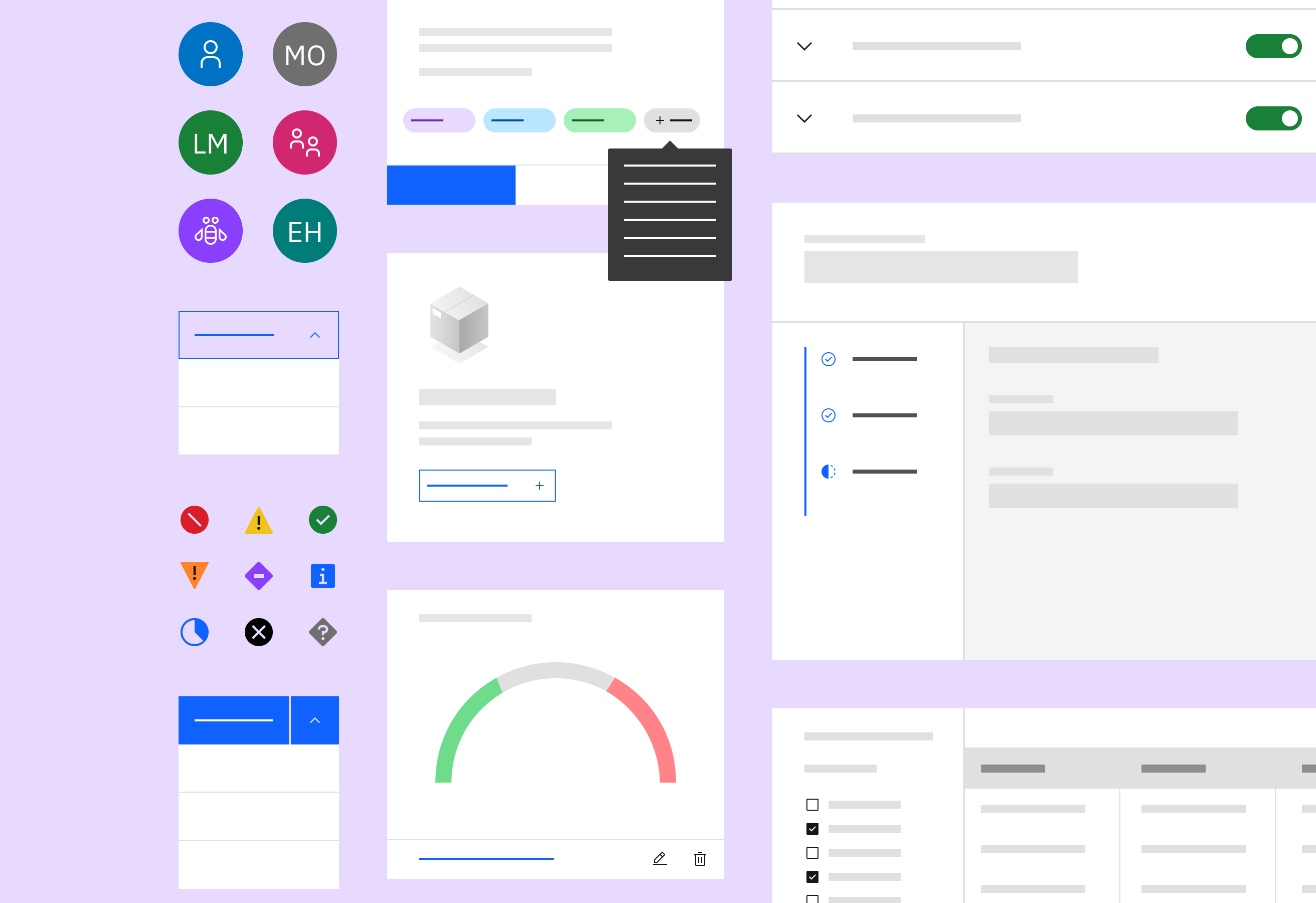
The foundation wasn't just the components — it was the token layer underneath them. We mapped every component to Carbon's design token architecture using Figma variables, ensuring colour and typography were driven by system tokens rather than hardcoded values. Every component was built with full interactive states (hover, focus, disabled, loading) and linked directly to official Carbon documentation — outlining usage rules, anti-patterns, and direct code mappings so nothing was left to interpretation.
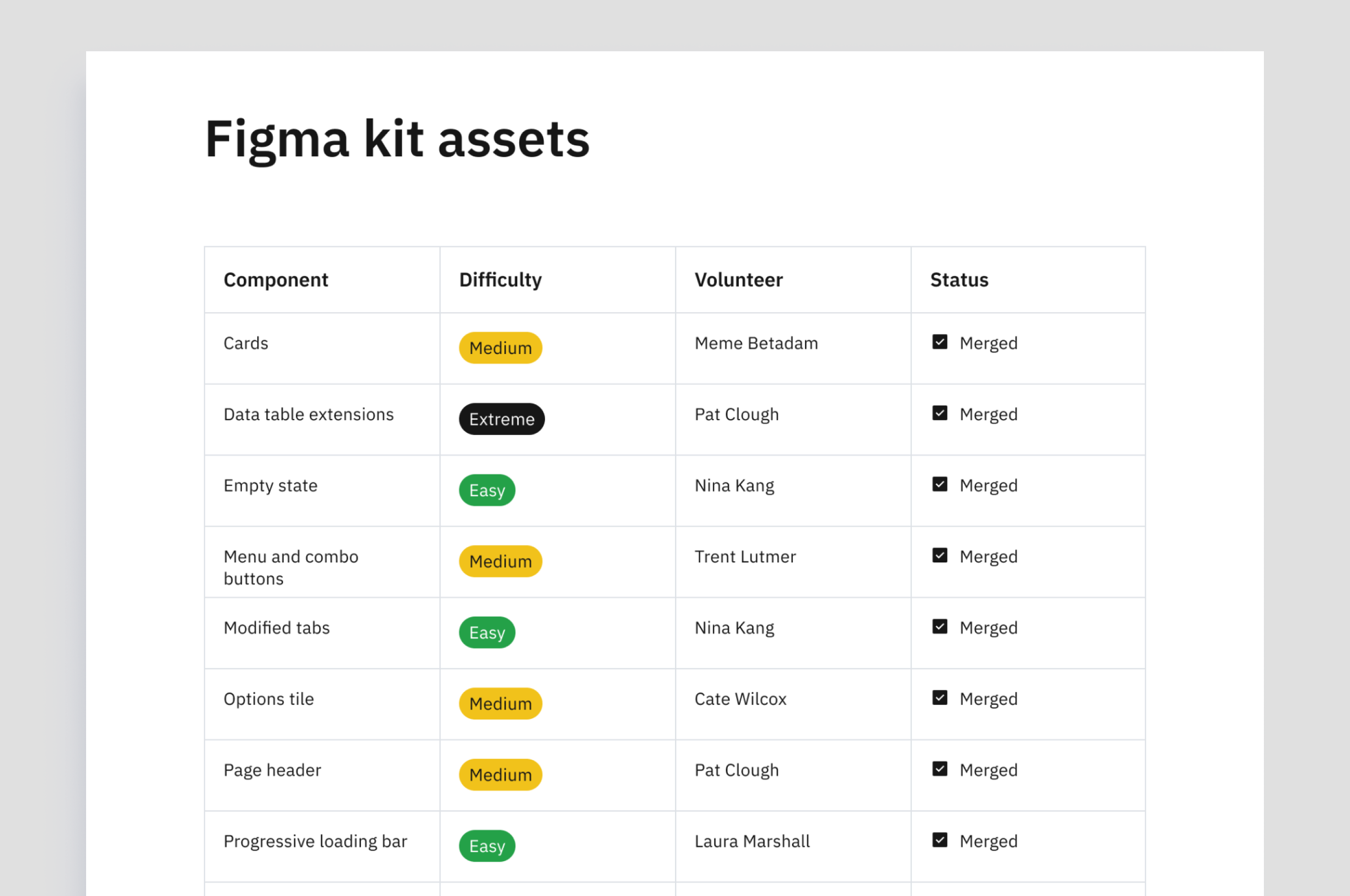
Leading the project meant balancing empathy with rigour. I matched complexity to individual capability, redistributed assignments when conflicting deadlines hit, and ensured consistent craft across the board. Most of the team had no prior design systems background — building this kit became an upskilling vehicle, and several went on to contribute to Carbon themselves.
The result
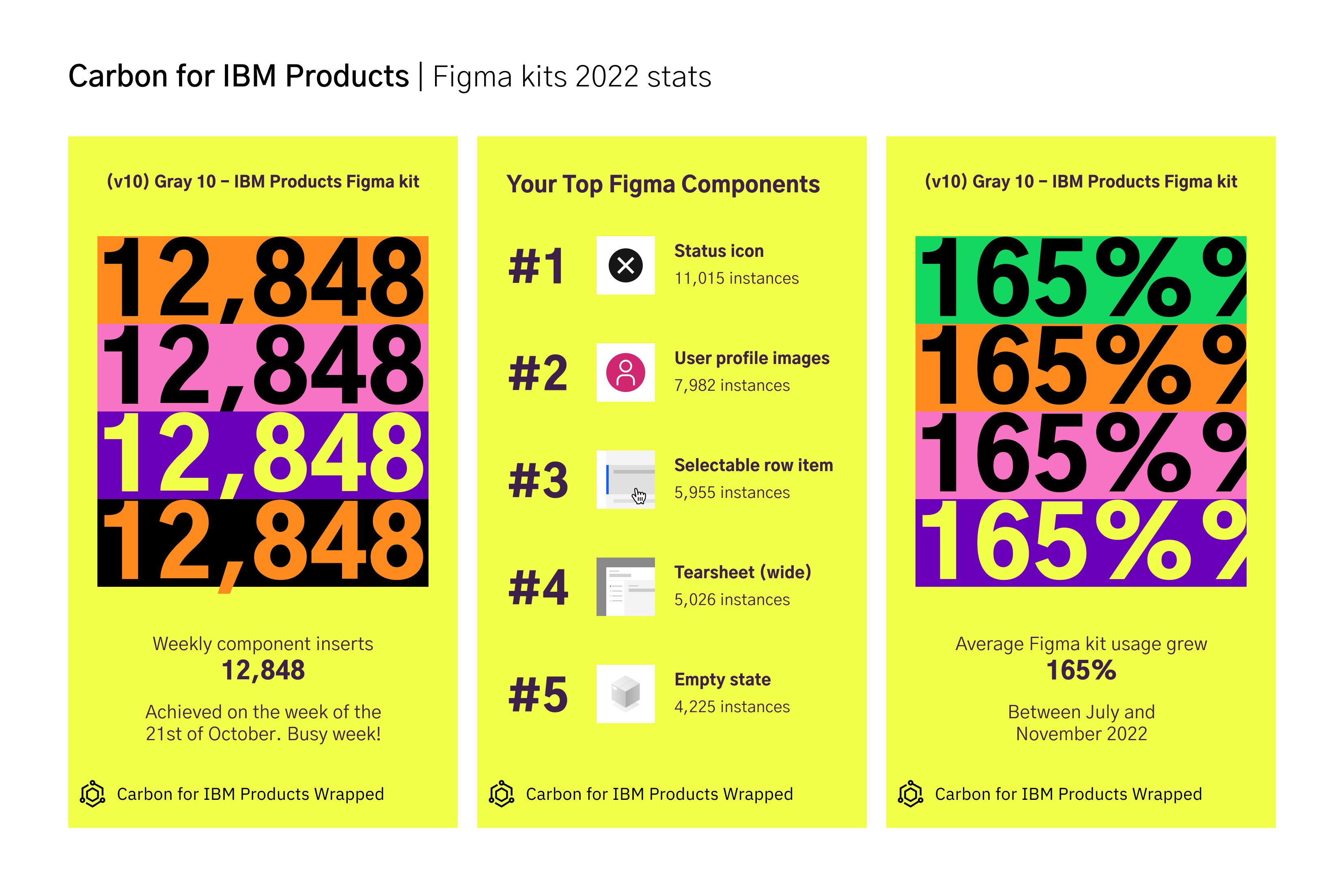
Launched in July 2022, the kit reached 12,848 weekly component inserts by December — a 165% growth in five months — and remains an essential daily tool for IBM product teams across the organization.
What surprised me most was the team. These were product designers volunteering time alongside their day jobs, spread across multiple time zones. Keeping them motivated through platform migrations and tight deadlines — while delivering a production-grade system thousands of designers rely on — required continuous support and clear structure. Strangers became a cohesive, dependable squad.