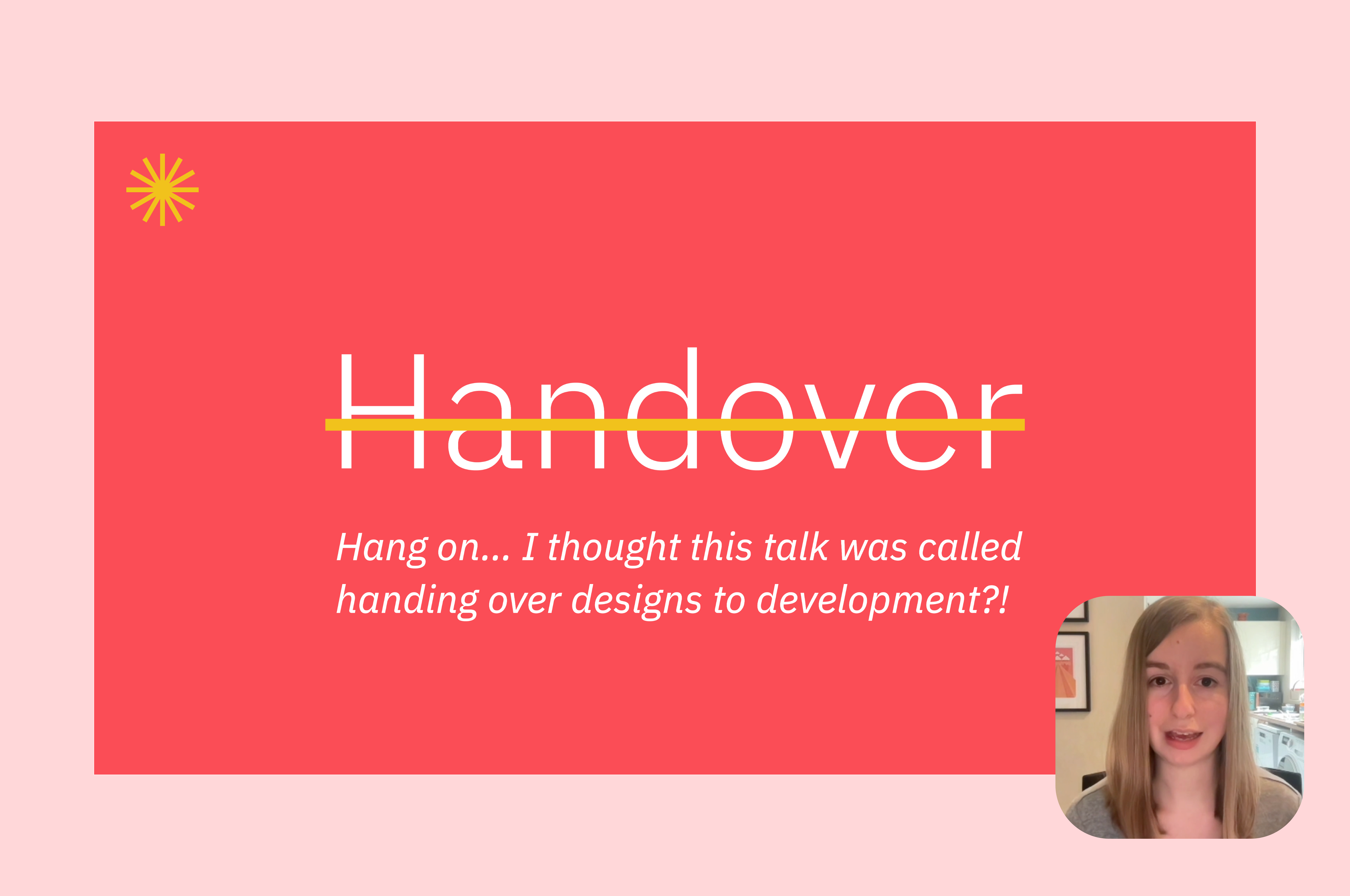
Good design dies in handoff. I found out why — and turned the findings into a talk.
Designers blamed implementation. Developers blamed the specs. I surveyed 100 developers across 12+ countries to find out who was right — then turned the findings into a talk, published guidance, and a community session that changed how IBM teams work.
A Designer Advocate doesn't just create content — they take what they hear from users and turn it into change. That's what this project was. The research surfaced a genuine problem: developers across IBM telling me the same thing, in 12 countries, unprompted. I turned that signal into a finding, took it to the design community, and pushed for the guidance to change how teams were expected to work. The content was the vehicle. The point was to change something.
The story
The research
This wasn't part of my role. I was working full-time as a product designer when I noticed the same friction recurring — design intent getting lost somewhere between Figma and the final build. I wanted to understand it properly before proposing anything.
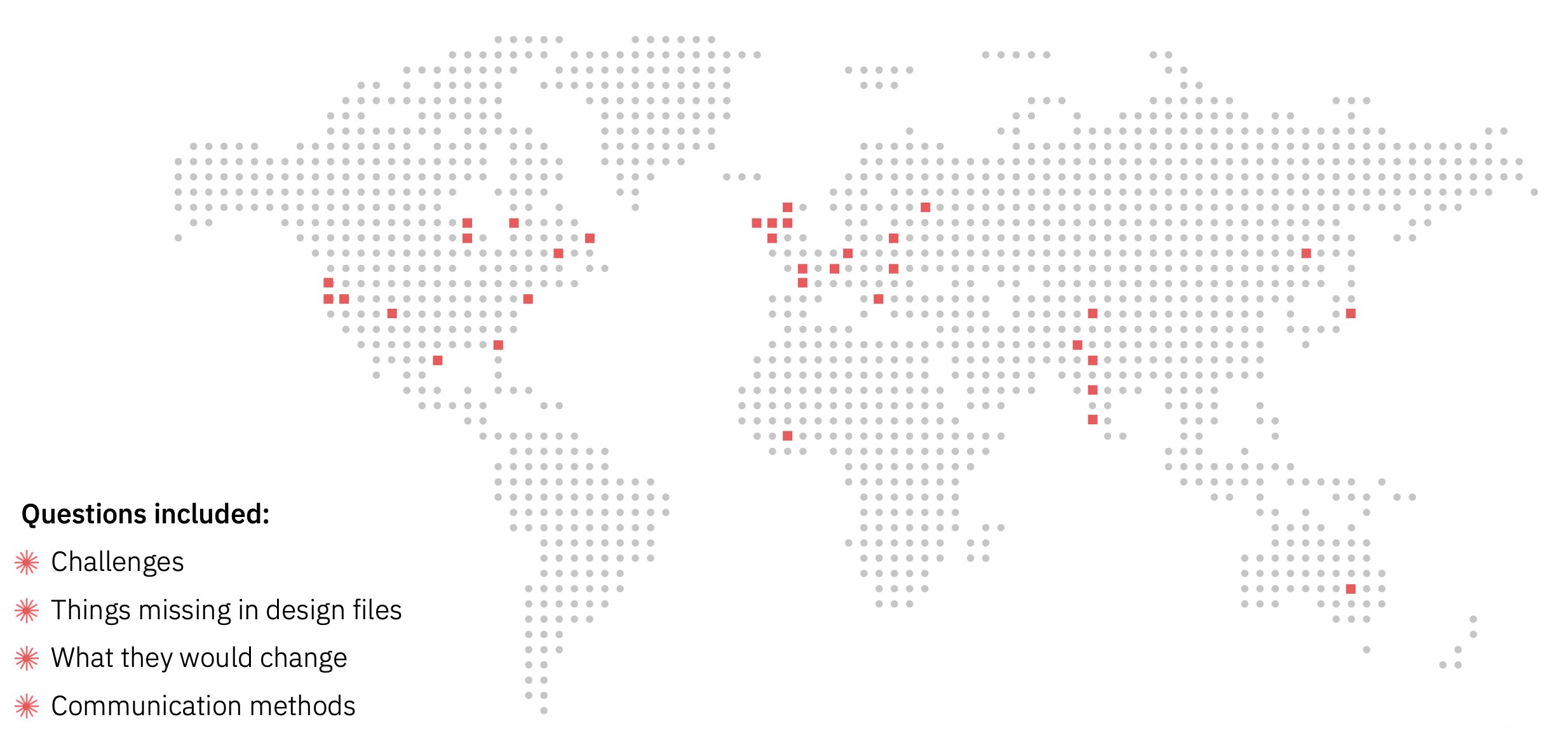
I surveyed developers across IBM Software to find out where implementation actually broke down. The same issues surfaced repeatedly: missing error states, unclear component usage, designs misaligned to the Carbon Design System, and solutions that ignored technical constraints.
The finding
The technical gaps were fixable. The bigger finding was cultural — teams with the strongest outcomes weren't handing work over, they were working through it together. The teams who struggled weren't asking for better specs. They were asking to be involved sooner.
A word isn't just a word when it's encoding a process. Handoff tells designers their job is done. The issue wasn't that developers needed more from design — it was that both sides needed a different relationship to the work, built on collaboration and shared ownership from the start.
“Rename the whole process of ‘handover’ to something else. There are many designers still stuck in a waterfall mentality where handover signals that their work is final… This type of thinking impedes collaboration between design and development and prevents quick iterative improvement.”
Survey respondentDeveloper, IBM
What it took
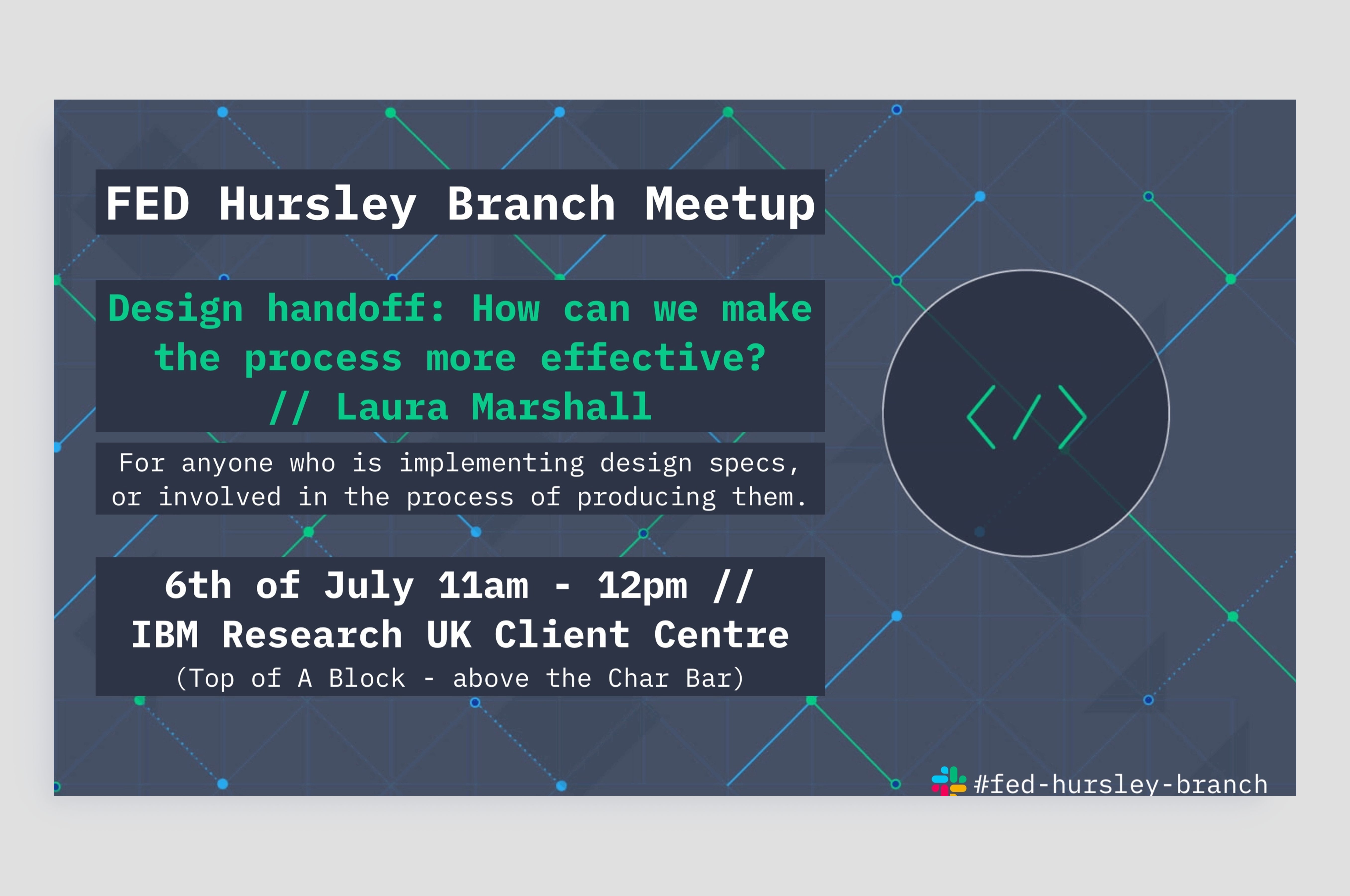
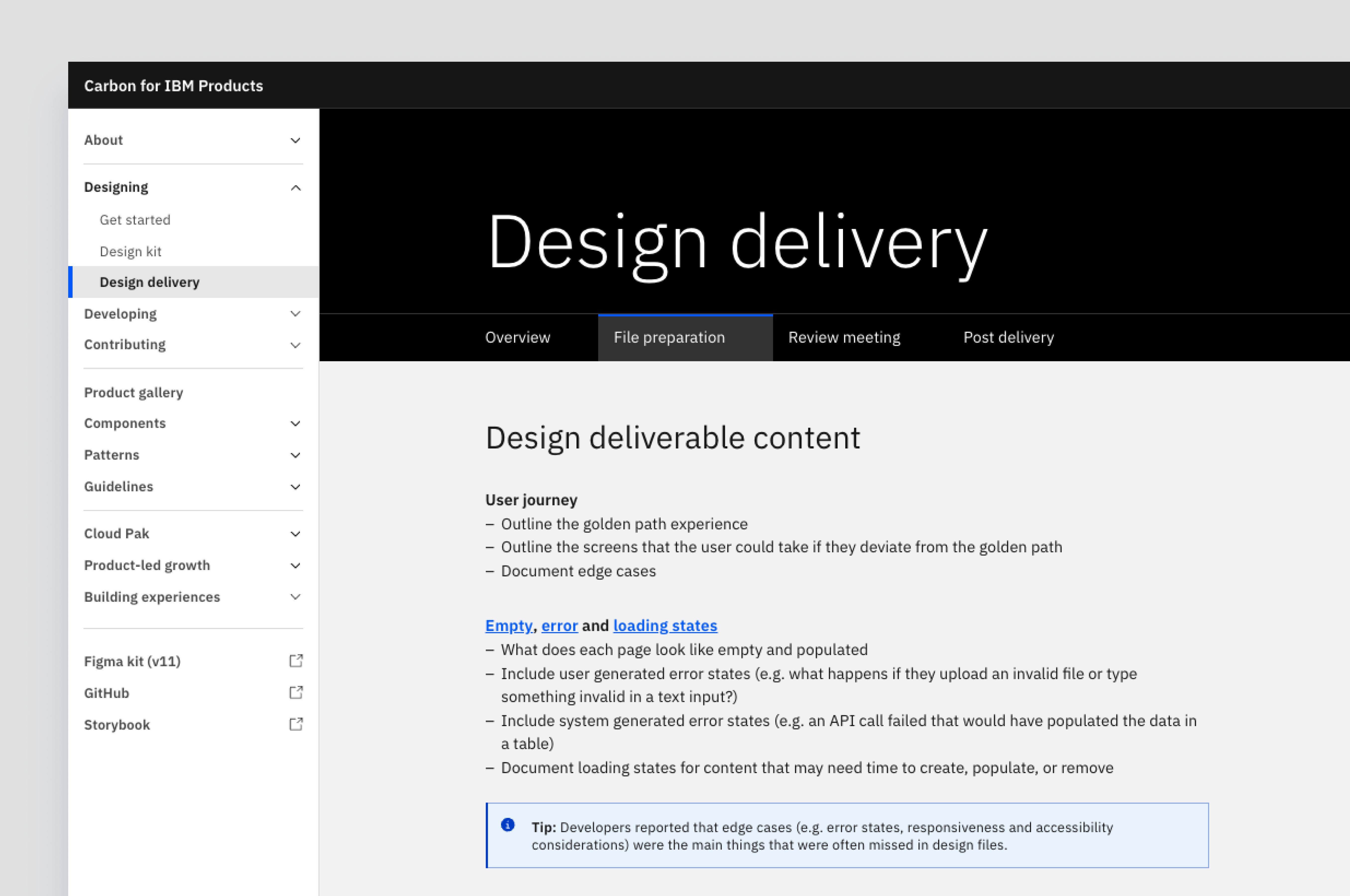
Research without action is just interesting. So I sequenced three deliberate interventions: a session with developers to test the insight, a talk for designers at IBM's Design Festival — available to 3,000+ — and published guidance a small team and I built so the whole organisation could apply it independently.
What it taught me about advocacy: the insight wasn't enough on its own. The session with developers came first — they refined the findings and validated what was worth pushing on. The Design Festival talk put it in front of designers across IBM who could act on it. The published guidance gave teams something they could apply without needing me in the room. The chain mattered: user signal → shared finding → format for each audience → change in how teams worked. That's the loop I want to run at Figma, at a bigger scale.